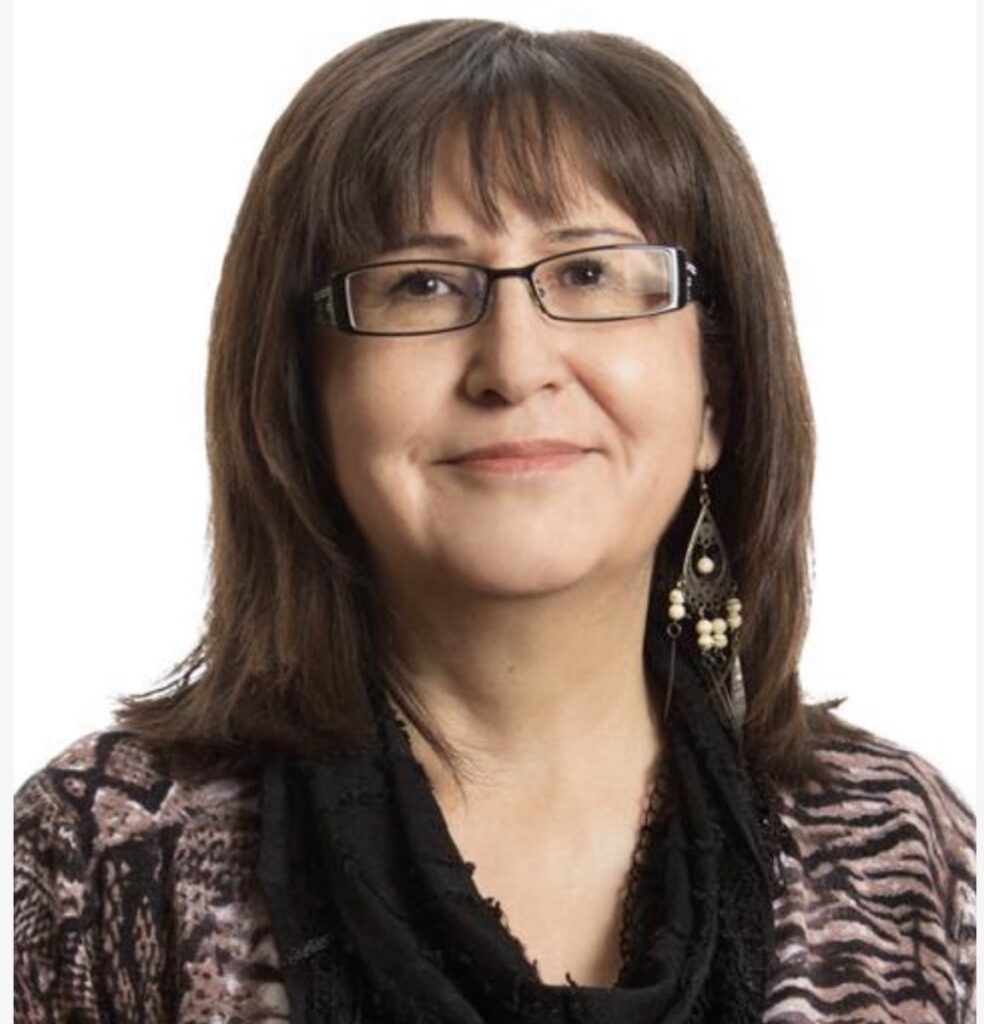
Dr. Evelyn Steinhauer is a nêhiyaw iskwew from Saddle Lake Cree Nation and a Professor in the Faculty of Education at the University of Alberta. She currently serves as Associate Dean, Indigenous Teacher Education and is on a one-year sabbatical, returning to the role in July 2027. She served concurrently as Associate Dean and Director of the Aboriginal Teacher Education Program (ATEP) until October 31, 2025, following many years of leadership as ATEP Director. Throughout her career, she has worked alongside Indigenous communities, Nations, educators, and students to strengthen Indigenous-led approaches to teacher education and educational transformation. Dr. Steinhauer’s research is grounded in nêhiyaw ways of knowing, being, and doing and focuses on Indigenous teacher education, Indigenous research methodologies, language revitalization, relational leadership, and community-engaged scholarship. Working collaboratively with First Nations, Métis, and Inuit communities, her research explores how Indigenous knowledge systems, relational accountability, and culturally sustaining pedagogies can strengthen education while advancing Indigenous student success, language resurgence, educational equity, and Indigenous self-determination. Her research is supported through provincial and national funding, including projects funded by the Social Sciences and Humanities Research Council (SSHRC), the Rideau Hall Foundation, the Kule Institute for Advanced Study (KIAS), and Alberta Education. Beyond the university, Dr. Steinhauer contributes nationally as a reviewer and advisor in Indigenous post-secondary education, teacher education, and institutional accreditation. She serves on several national committees dedicated to advancing Indigenous education and language revitalization and is committed to building strong partnerships that benefit Indigenous learners and communities. Dr. Steinhauer’s scholarship is distinguished by its integration of research, teaching, leadership, and service. Mentorship is woven throughout her work and extends well beyond the university, reflecting a lifelong commitment to walking alongside students, educators, researchers, leaders, and Indigenous communities. Guided by relational accountability and nêhiyaw ways of knowing, being, and doing, she seeks to create spaces where others are supported to grow, lead, and contribute to their communities. In 2026, she was honoured with the University of Alberta Killam Award for Excellence in Mentoring, recognizing her outstanding contributions to mentorship across higher education and Indigenous communities.